

The Bosch LSU 4.9 or NTK 5-Wire sensors can be connected to an LTC or LTCD unit to transmit the values on CAN. The LTC is the singular version that connects to one Lambda sensor, while the LTCD, the dual version, connects to two Lambda sensors.
LTC
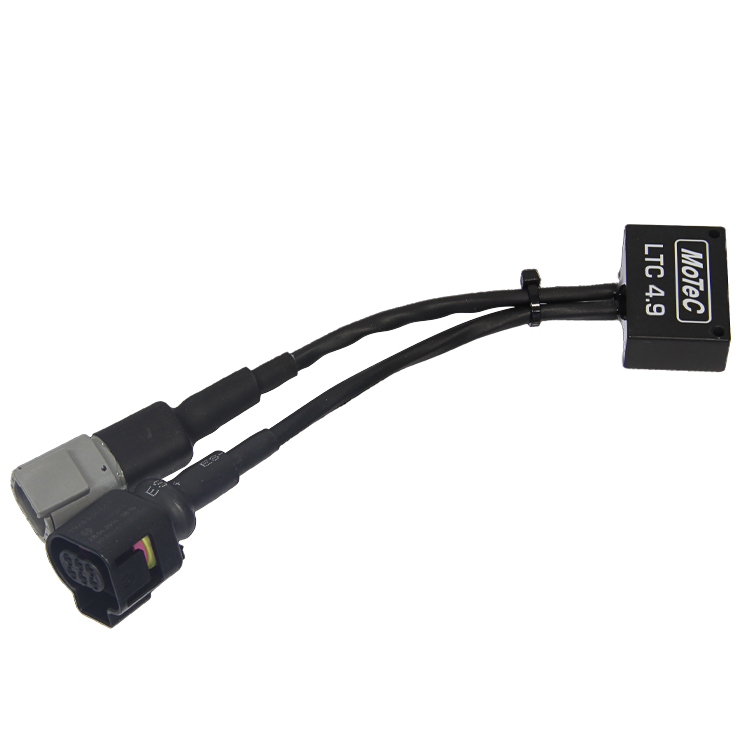
For 1 Bosch LSU 4.9
1x 4pin DTM Power/CAN
1x Bosch LSU 4.9 Connector
1x CAN at 1Mbit
Operating Voltage: 11v-16v
Typical Current: 0.61A – 1.11A
Startup Current: 2A
LTCD
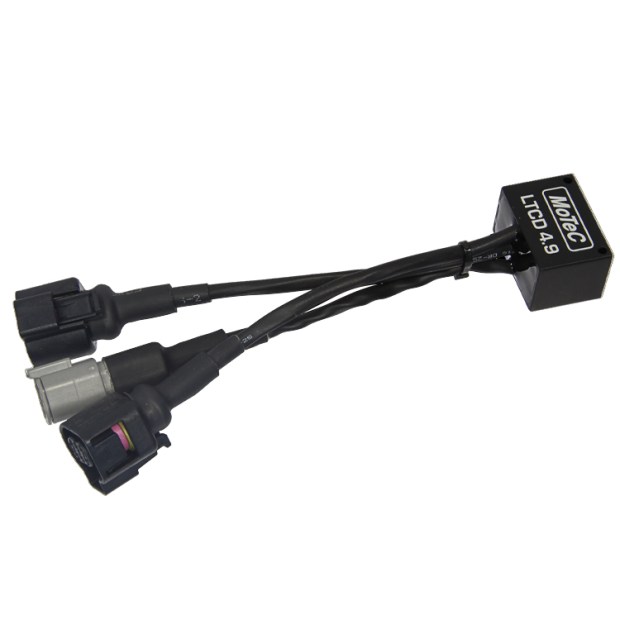
For 2 Bosch LSU 4.9
1x 4pin DTM Power/CAN
2x Bosch LSU 4.9 Connectors
1x CAN at 1Mbit
Operating Voltage: 11v-16v
Typical Current: 0.61A – 1.11A
Startup Current: 2A
LTC-NTK
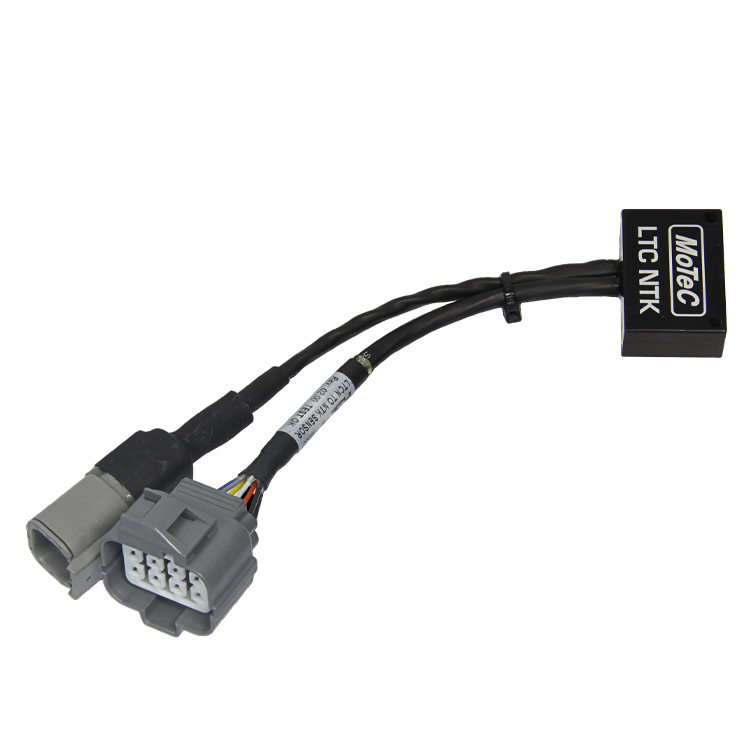
For 1 NTK 5-Wire Sensor
1x 4pin DTM Power/CAN
1x NTK 5-Wire Connector
1x CAN at 1Mbit
Operating Voltage: 11v-16v
Typical Current: 0.61A – 1.11A
Startup Current: 2A
LTCD-NTK
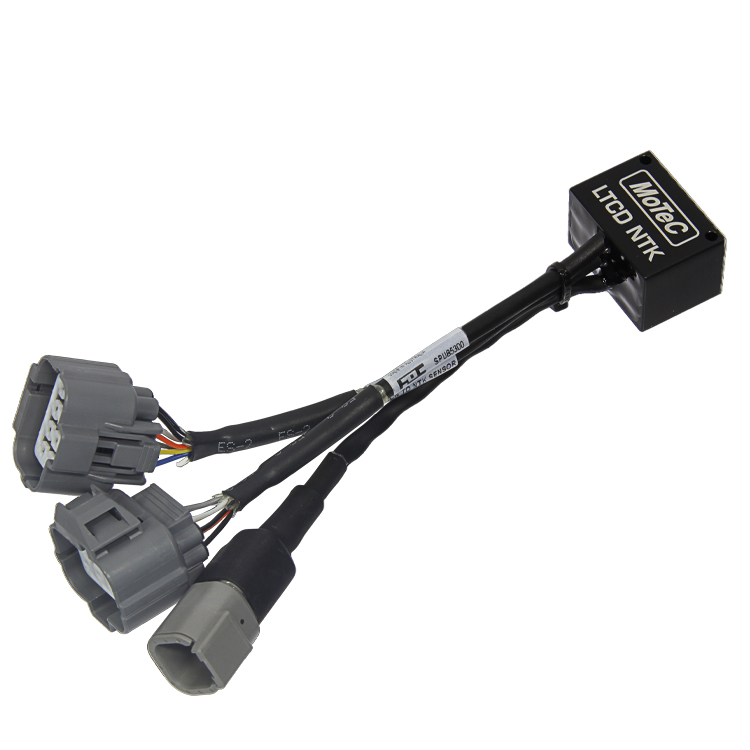
For 2 NTK 5-Wire Sensor
1x 4pin DTM Power/CAN
2x NTK 5-Wire Connectors
1x CAN at 1Mbit
Operating Voltage: 11v-16v
Typical Current: 0.61A – 1.11A
Startup Current: 2A
Up to 32 Lambda sensors can be connected on the one CAN bus using numerous LTCs, LTCDs or a combination of both. They are compatible with any current MoTeC Dash, Logger, ‘hundred series’ or M1ECU. The can also be used (in conjunction with a UTC) as a standalone solution with a PC, for example on a dyno.
- Narrowband Lambda measurement for emission control
- Wideband Lambda measurement for accurate tuning
- Narrowband—Ford
Sensor Types: - 5 wire wideband—Bosch LSU
- 5 wire wideband—NTK UEGO
 raceBME.com